Fence and Deck Staining in League City and the Houston Area
Outdoor wood in the Houston area ages fast. The combination of intense UV, high humidity, Gulf Coast salt air, and the wet-dry cycle of our summers and rainy seasons is about as tough a climate as wood can deal with. A fence that was installed five years ago in League City or Friendswood can look like it's fifteen years old if it's never been stained or sealed. And a deck that's been neglected long enough starts to develop soft spots, cracked boards, and gray weathered wood that's actually starting to break down structurally.
We do fence and deck staining, painting, and restoration across the greater Houston area. This is one of those jobs where the prep makes a very visible difference in how long the finish lasts — and it's the step most people skip when they try to do it themselves, or that low-bid contractors rush through.
Fence Staining and Painting
For wood fences, we almost always recommend stain over paint. Paint on a fence looks nice for a while but it traps moisture when it inevitably starts cracking — and it will crack, because fence boards expand and contract with temperature and humidity changes. Once moisture gets under peeling paint and into the wood, it accelerates rot. Stain penetrates into the wood fiber and doesn't peel because there's no surface film to lift. A quality semi-transparent stain protects the wood, lets it breathe, and lets the natural grain show through. It also re-coats much more easily when the time comes — usually every three to five years down here.
The prep process for a fence starts with power washing. We use enough pressure to strip off surface algae, mildew, and gray oxidation from the wood, but not so much that we're blowing fibers out of the boards. After washing, we let the fence dry completely — this matters a lot. Staining wood that still has moisture in it is one of the most common causes of premature failure. Stain needs to penetrate the wood, and it can't do that if the fibers are already saturated. We schedule around drying time, which in Houston summer can take longer than you'd expect.
After the wood is dry, we inspect every board. Nails and screws that have backed out get reset or replaced. Boards that are cracked, split, or starting to rot get replaced before we stain — there's no point protecting wood that's already compromised. Then we stain using a brush and backroll technique on the boards, which gets product into the cracks and gaps that a roller alone would miss.
Cedar vs. Pine — What We Recommend
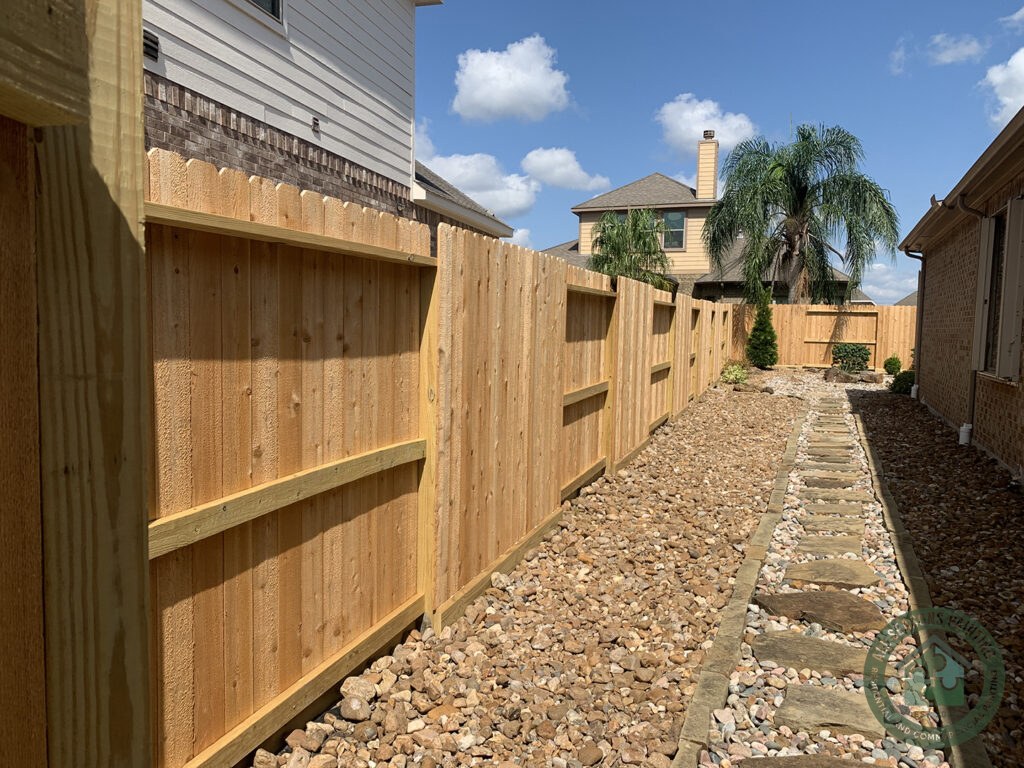
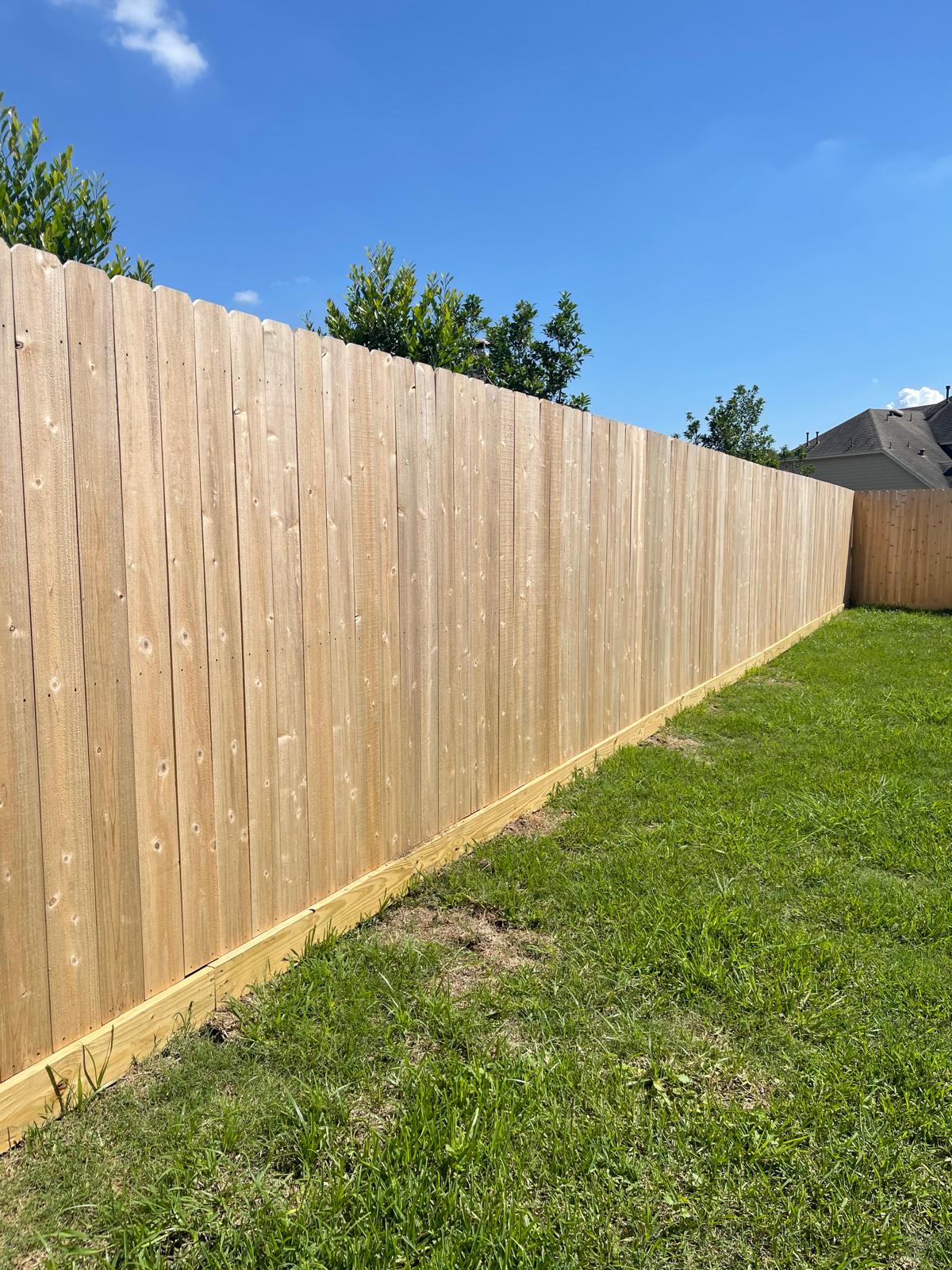
If we're replacing boards on your fence, we'll recommend cedar if the budget allows. Cedar has natural oils that resist rot and insects better than treated pine, and it takes stain beautifully. It costs more up front but holds up longer in this climate. Standard pressure-treated pine is the more common choice for its lower price, and it's a perfectly reasonable option — it just needs to be fully dried before staining, and fresh pressure-treated lumber can take several weeks to dry enough. We check moisture content before staining any new boards.
Deck Staining and Restoration
Decks take everything a fence takes, plus foot traffic and furniture. A deck that's been neglected looks bad and can become genuinely unsafe if the surface boards are soft or the structural members have moisture damage. Before we stain any deck, we do a full inspection — walking the deck and checking for soft spots, cracked boards, and any structural concerns. Surface boards we can replace. If there are structural issues with posts or joists, we'll tell you that before we start, because staining over a structurally compromised deck isn't the right call.
For deck surfaces, we use deck stains rated specifically for foot traffic — they contain more binder than fence stains to resist wear. On bare or heavily weathered decks, we often apply a wood brightener after power washing to open up the grain and pull out remaining gray oxidation before staining. It makes the stain penetrate better and the color comes out more even. On older decks with heavy buildup, sanding between prep and staining gives the best finish.
How Often Does It Need to Be Done?
In the Houston area — with the sun and humidity we get — plan on re-staining a fence every three to five years, and a heavily-used deck every two to four years. The better the prep and the higher-quality the stain, the longer it holds. Decks that are in full sun all day fade faster than ones with shade. Semi-transparent stains need re-coating more often than solid stains because there's less pigment blocking UV. We can walk you through the options when we're on site and make a recommendation based on how your specific fence or deck is situated. If you're also repainting the exterior of your house, we handle that too — see our exterior painting page. For minor fence board repairs, loose posts, and other small jobs around the property, see our handyman services.
What's Included With Every Fence and Deck Job
✓ Power washing and surface cleaning
✓ Structural inspection — boards, posts, fasteners
✓ Board replacement as needed
✓ Loose nail and screw re-setting
✓ Wood brightener on heavily weathered surfaces
✓ Premium stain or paint — two coats where needed
✓ Full cleanup
✓ 3-year craftsmanship warranty backed by $5M commercial insurance