
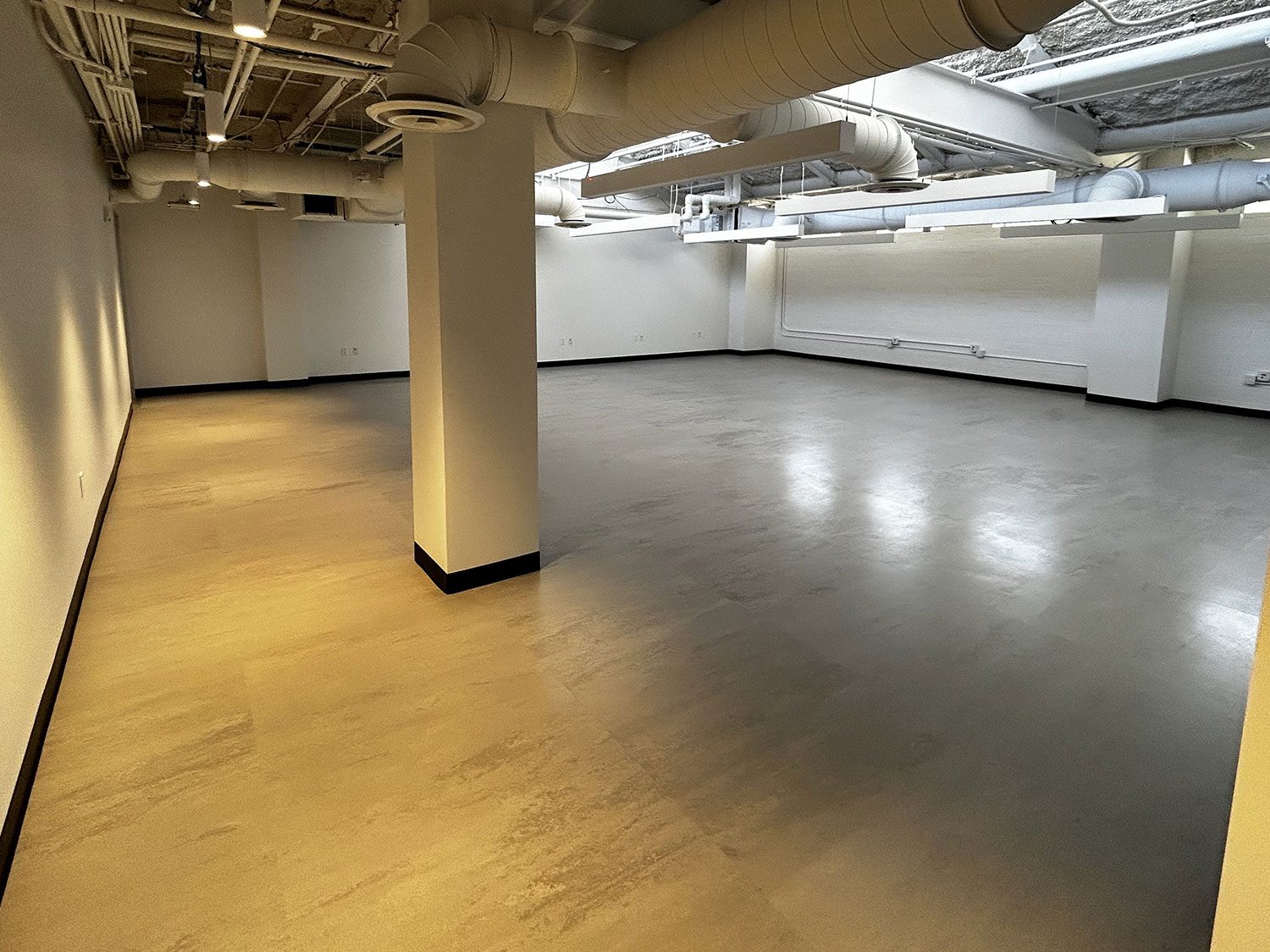
I get calls from business owners all the time who think commercial painting is just residential painting but bigger. And I get why — it's still paint, still rollers and brushes, still the same basic process on the surface. But the reality is pretty different once you're actually doing the work. The scale changes everything, the scheduling changes everything, and the products you use have to change too.
I've been doing commercial work in Houston since 2015. Here's what I've actually learned doing it.
Commercial Painting Is a Different Animal Than Residential
When I paint a house, I'm dealing with rooms that are maybe 12 by 14 feet. A single commercial warehouse near the Port of Houston can have 30-foot ceilings and 40,000 square feet of wall space. That's not the same job. It changes your equipment, your prep approach, your paint selection, and how you stage the work.
On the residential side, I can usually start and finish a room in a day. Commercial jobs get broken into phases. Sometimes I'm working on one wing of an office while the other wing is still occupied. That's normal. The business can't just shut down for a week while we paint.
And the paint itself matters more in commercial settings. High-traffic areas need something more durable — flat paint that looks fine in a bedroom will look terrible on a hallway wall in an office building after six months of people brushing against it. Sheen level selection on a commercial job is something I actually think about carefully, not just pick from a color fan deck.
Working Around Business Hours — Early Starts, Weekends, Phases
Most of my commercial clients can't give me an empty building during regular hours. So we adapt. A lot of commercial interior work I do starts before 6am. By the time employees arrive at 8 or 9, we've already gotten four hours in, the paint is tacking up, and the smell has started to clear. We pack up and come back the next morning and do it again.
Weekend work is common too. Retail spaces in particular — a store in the Galleria area or a strip center in Sugar Land — they can't close mid-week. Saturday night after close until Sunday afternoon before open is actually a realistic window for a lot of retail painting. I've done it dozens of times.
Phasing the job by section is the other approach. We'll paint one conference room cluster while the rest of the floor is working normally. Or we'll hit the lobby and common areas first, then move into private offices one pod at a time. It takes longer than doing everything at once, but it keeps the business running. Most clients appreciate that we plan for it upfront rather than asking them to figure it out themselves.
Low-VOC Paints in Occupied Spaces — This Is a Real Health Issue
I want to talk about this one honestly because I see a lot of marketing around "low-VOC" that treats it like a nice-to-have feature. In occupied commercial spaces — medical offices, schools, occupied offices — it's not optional. It's the right thing to do.
VOCs are the compounds that off-gas from conventional paints. High concentrations in an enclosed space cause headaches, dizziness, respiratory irritation, and worse over longer exposure. In a medical facility where patients may already be immunocompromised, that's a real problem. In a school with kids present, that's a real problem. In an office where people spend eight hours a day, that's a real problem.
I use low-VOC formulations on all occupied commercial interior work as a default now. Not because it makes a good bullet point on a proposal, but because I've worked in buildings where someone used conventional paint in a poorly ventilated space and the air quality was genuinely bad for days. The products available today — Sherwin-Williams Harmony, Benjamin Moore Natura — perform just as well as conventional formulas. There's no tradeoff anymore.
If a contractor tells you low-VOC doesn't matter for your project, ask them why. The answer should be specific to your situation, not a blanket dismissal.
Houston Warehouse Painting — The Port Area and Industrial Belt
We do a fair amount of warehouse work in the industrial corridor near the Port of Houston — Pasadena, La Porte, Deer Park, Channel View. These are big square footage jobs, and the prep requirements are completely different from office or retail.
Warehouse walls accumulate grease, dust, chemical residue, and in some cases mold from humidity exposure near the ship channel. Painting over any of that without proper prep means the paint fails in a year. Pressure washing, degreasing, and sometimes a bonding primer before any topcoat goes down — that's the standard approach on industrial space.
Sheen selection matters differently here too. A semi-gloss or eggshell on a warehouse wall makes it easier to wipe down and keep clean. Flat paint in a warehouse is usually the wrong call. And for floors in those spaces, we're often talking epoxy coatings rather than standard paint — a completely different product that needs proper surface profile and moisture testing before application. See our warehouse painting page for more on what that process looks like.
Spray application is more common on large warehouse jobs. But Houston's humidity matters here — I won't spray on a day where moisture is too high. Even inside a large warehouse, high ambient humidity slows cure time and can affect adhesion if you're not watching it.
Office Spaces, Retail, and Medical — Each One Is Different
Office spaces in The Woodlands or the Energy Corridor usually come down to scheduling and color consistency across large open-plan floors. Getting an even sheen on 10,000 square feet of open office ceiling without lap marks takes experience and the right roller nap. It's not complicated, but it's easy to do wrong.
Retail is more about color accuracy and brand standards. A national brand coming into a Houston location needs their specific colors matched exactly. That's not negotiable. We use spectrophotometers for color matching on brand-critical retail work, not eyeballing it.
Medical facilities in the Texas Medical Center or the surrounding area have the most specific requirements. Antimicrobial paints in exam rooms and procedure areas. Low-VOC throughout. Scheduling that avoids disrupting patient care. And sometimes special finishes in areas that get regular chemical wipe-downs — standard latex doesn't hold up to hospital-grade disinfectants the way a properly specified commercial coating will.
Houston Humidity and Commercial Scheduling
Exterior commercial work in Houston is entirely weather-dependent. I've talked about this in other posts, but the short version is: summer humidity makes exterior spray work unpredictable, and the good exterior windows fill up fast. October through early December and February through mid-March are the most reliable stretches for exterior commercial work here.
But interior commercial work runs year-round. Rain doesn't matter, humidity inside a climate-controlled building is controlled, and the heat in July doesn't affect interior painting the way it affects exterior. If you have interior work that needs to happen, there's never a bad season for it. We can schedule around your business calendar instead of around the weather calendar.
How to Get a Real Commercial Estimate
If you're calling around for commercial painting quotes, have this information ready before the first call:
- Square footage of the space — wall area, not just floor area
- Ceiling height
- Whether the space will be occupied during the work
- Your scheduling constraints (hours, days, hard deadlines)
- Any special requirements — medical, food service, specific brand colors
- The current condition of the surfaces — new construction, recoat over existing paint, or surfaces that need repairs first
A contractor who gives you a firm quote without knowing most of that information is guessing. And when they guess low to win the job, you find out at the end when there's a change order.
I do free on-site estimates for commercial work throughout Greater Houston. I'll walk the space with you, ask questions, and give you a written number that doesn't change unless the scope changes. Call me at (713) 517-8136 or fill out our commercial painting inquiry form and I'll get back to you same day.